
· Luke Faragher · Mobile Networks · 8 min read
No, I can't hear you: why UK phone signal got this bad
An MP says London reception is worse than Kabul a decade ago, and the UK now trails Kazakhstan for download speeds. He is more right than he knows. Here is why.

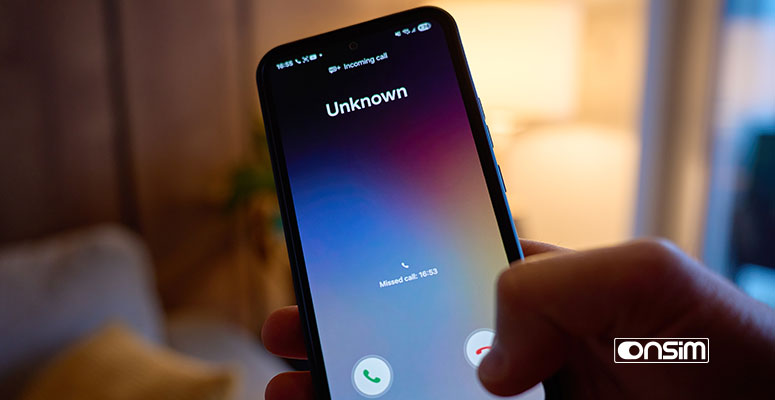
“Can you hear me?” asked the Telegraph this month. Speaking as someone who has run a mobile network since 2013: no, increasingly, we can’t.
Tom Tugendhat - former security minister, former soldier - said he gets worse mobile reception in London than he did in Kabul a decade ago. The Telegraph, meanwhile, reported analysis putting the UK 57th in the world for overall mobile performance and 70th for download speeds - behind Kazakhstan, Cambodia and Romania, and behind every single EU and G7 country.
Cue the usual response: outrage, a ministerial statement about “world-class connectivity”, and nothing changing.
The coverage of the coverage keeps missing the point. Tugendhat is right - but the interesting question is why a rich, dense, technically sophisticated country ended up here. It wasn’t an accident. It was a series of choices, each of which made sense on somebody’s spreadsheet.
Choice one: masts are treated as a nuisance, not infrastructure
Tugendhat’s own diagnosis was capacity: “there just aren’t enough masts for the number of people.” He’s right, and it’s worse than that. The industry body Mobile UK has told government that antenna sites in London are being removed by property developments faster than they can be replaced - and the capital now has fewer antenna sites per person than Manchester or Leeds. The worst-affected areas are the ones you’d least expect: the West End, the City, Westminster.
Nobody wants a mast on their building, everybody wants five bars inside it. Water and electricity stopped being treated this way a century ago. Mobile coverage is still fighting for the status of infrastructure rather than eyesore - and until planning treats a removed antenna like a severed water main, London will keep going backwards while demand doubles.
And here’s the part that should change the mast conversation entirely. A lot of objections to antennas come down to worry about radiation. Whatever your view on RF exposure, the physics points the opposite way to the intuition: your phone constantly adjusts its transmit power to reach the nearest mast, and when signal is weak it ramps toward maximum output - from the device in your hand or pocket, centimetres from you. A peer-reviewed study in Environmental Research measured real-world exposure from phones as up to four orders of magnitude higher on 1–2 bars than on 4–5 bars. We looked at this for a customer who was worried about RF exposure in their building, and the conclusion surprised them: the strongest transmitter in the room is never the distant mast - it’s the phone, and the worse the coverage, the harder it shouts. If a community blocks an antenna out of radiation concern, it doesn’t reduce anyone’s exposure. It raises it, for every phone user in the not-spot it creates.
Choice two: the switch-offs traded your indoor signal for running costs
This is the part I wrote about when BT’s landline switch-off was in the news, and it applies squarely here.
When EE switched off 3G in 2024, 3G was consuming around 35% of its network electricity while carrying 0.6% of data - an easy decision on paper. But 3G’s lower frequencies penetrated buildings, basements and thick walls far better than the higher-frequency 4G and 5G that replaced it. Indoor voice coverage got measurably worse, and the customers who paid that price never appeared in the press release.
Now it’s 2G’s turn. The government and all four operators agreed in 2021 to retire 2G by 2033; EE has said it will start from May 2029, VodafoneThree during 2030, and government published a voluntary 2G switch-off charter in March 2026 to smooth the transition. Here’s the detail that should give you pause: O2 is keeping 2G alive partly to carry 999 calls in remote areas that 4G doesn’t reach. The network being retired is the one still trusted with emergency calls. When it goes, the last legacy fallback for voice in weak-signal Britain goes with it.
I’m not arguing for keeping museum networks running forever. I’m arguing that every switch-off has been presented as pure modernisation when it is partly a cost-reduction programme with a coverage price - and the price is always paid indoors, in rural areas, and by whoever can’t get a signal to complain.
Choice three: your phone is forbidden from using the mast next door
Here is the maddest part of the UK setup. You can be standing under a rival network’s perfectly good mast, with one bar on your own network, and your phone is not allowed to use it.
Domestic roaming - letting phones fall back onto whichever network has signal - was formally considered by government and Ofcom. The industry opposed it and it was not pursued. The operators’ argument is that roaming removes the incentive to build coverage; whoever invests in a rural mast ends up subsidising rivals who didn’t. It’s not a stupid argument. But two facts sit awkwardly beside it. First, 999 calls already roam onto any available network - the capability is built, tested and used every day; it’s switched off for everything that isn’t an emergency. Second, the operators demonstrably can collaborate when the economics are arranged: the Shared Rural Network had all four operators sharing newly built masts, put £500m of industry money in, and hit its 95% 4G landmass target a year early - before the total not-spots element was scaled back.
So the UK ended up with the worst of both worlds: enough collaboration to share the cost of rural masts, not enough to let your phone use the coverage that already exists.
The quiet subsidy: your broadband now carries their calls
One more incentive worth saying out loud. The networks’ universal answer to indoor not-spots is WiFi Calling - and it’s genuinely useful, I recommend it myself below. But notice what it actually is: your call carried over the broadband you pay for, through the router you bought, instead of over the radio network your tariff is supposed to fund. Every call that completes over your WiFi is indoor capacity the operator didn’t have to build. I can’t tell you what’s in any operator’s head, but I can tell you what the incentive structure rewards: once “turn on WiFi Calling” becomes the standard answer to “I have no signal at home”, the commercial pressure to fix the underlying coverage quietly evaporates - and you’re paying twice for the privilege, once to the mobile network and once to the ISP whose line is doing the work. WiFi Calling should be a belt-and-braces backup. In parts of the UK it has become the load-bearing wall.
What you can actually do about it
I run a network that rides on the UK’s leading radio network, so let me be straight: no provider - us included - can change the physics or the planning system. Anyone who tells you their SIM magically fixes UK coverage is selling you something. What actually helps:
Turn on WiFi Calling. Yes, given the section above, there’s an irony here - but until the masts improve it’s the single biggest indoor fix, and refusing it on principle only punishes you. Your calls travel over broadband when the mast signal can’t reach your kitchen; there’s a bonus, too - a phone that connects over WiFi stops ramping its transmit power hunting for signal. We wrote a guide to WiFi Calling here, and it’s included on ONSIM SIMs.
Make sure VoLTE is active. Calls over 4G mean your phone isn’t hunting for disappearing legacy networks to carry voice.
Check your actual postcode, not the national percentage. “99% population coverage” is measured outdoors. Your house is not outdoors. Use the operators’ coverage checkers and, better, ask neighbours what actually works.
If calls are business-critical, build in a fallback. Our business customers increasingly treat mobile signal like power: assume it mostly works, and have a plan for when it doesn’t - WiFi Calling at premises, and numbers that can ring multiple handsets so one dead zone doesn’t kill the call.
The fix isn’t mysterious
Treat masts as critical infrastructure in planning. Be honest that switch-offs have a coverage cost and mitigate it before, not after. And extend the roaming that already protects 999 calls to ordinary voice calls in not-spots - the industry’s investment-incentive argument deserves an answer, but “your phone can see a working mast and isn’t allowed to use it” is not a defensible end state for the country that invented the cellular standards half the world runs on.
Tugendhat compared London unfavourably to Kabul. The comparison that stings more is with ourselves: none of this is a technology problem. We know how to fix it. We keep choosing not to.
Luke Faragher is the founder of ONSIM, an independent UK mobile provider running SIM-native business and landline services since 2013. Rankings via analysis reported by The Telegraph, July 2026; mast and antenna-site statements via Mobile UK; switch-off dates via the House of Commons Library and the government’s 2G Switch-Off Charter.