
· Luke Faragher · Mobile Networks · 9 min read
How to Stop Spam Calls in the UK: What Works and What Does Not
A practical guide to stopping spam calls in the UK: TPS, 7726, handset screening, network blocking tools and where to report, from a network founder.
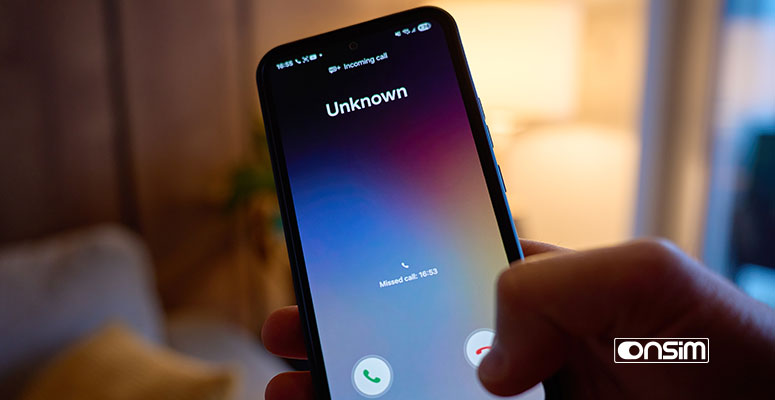
I have run a mobile network since 2013, and I will tell you upfront what this guide will not promise: total silence. Nobody can offer you that honestly. Spam calls come from an industry, some of it legal, most of it not, and the tools available to you work on different slices of it. Stack them up and you can get from several calls a day to a few a month. Here is how, with what each layer actually does.
Why you get spam calls in the first place
Understanding the supply chain helps you pick the right defence.
Data breaches. Your number has almost certainly leaked at some point, and breached databases get traded and merged. Once your number sits next to your name and address on a list, it is worth more, and it gets called more.
Lead generation consent chains. That competition entry or comparison site from 2019 may have included a consent box naming “carefully selected partners”. Lists built this way are sold on, sometimes through several hands, each buyer claiming the original consent covers them. The ICO pursues the worst offenders, but the economics keep it going.
Number recycling. UK networks reuse mobile numbers after a period of dormancy. If your number previously belonged to someone who spread it widely, you inherit their spam.
Random and sequential dialling. Scam operations do not need a list at all. Autodiallers can work through number ranges, and every answered call marks a number as live. This is why “how did they even get my number” often has a boring answer: they did not. They guessed.
That last point matters, because it explains the golden rule: the less you engage, the less you get called.
The quick wins on your handset
Start here, because it costs nothing and works today.
Block individual numbers. Every iPhone and Android phone lets you block a number from the recents list. Useful for repeat offenders, nearly useless against operations that rotate numbers, which is most of them.
iPhone: Silence Unknown Callers and Call Screening. Silence Unknown Callers sends any number not in your contacts, recent outgoing calls or Siri suggestions straight to voicemail. Since iOS 26 there is a stronger option: Call Screening answers unknown calls silently, asks the caller to state their name and reason, and only rings your phone once they have. Both live under Settings, Apps, Phone, Screen Unknown Callers. The trade-off is real: your GP, your delivery driver and your child’s school are all unknown numbers too.
Android: Call Screen and friends. Google Pixel phones have Call Screen, which answers on your behalf and transcribes the caller’s response in real time. Samsung phones ship with Smart Call, which flags suspected spam using a shared database. All Android phones can silence unknown or private numbers in the Phone app settings.
Check before you call back. If you missed a call and do not recognise the number, look it up before returning it. Our free UK phone number checker tells you which network and area a number belongs to, which is often enough to spot a call that makes no sense.
Register with the TPS, but know its limits
The Telephone Preference Service is the UK’s official do not call register. Registration is free, online or on 0345 070 0707, and it makes live unsolicited marketing calls to your number unlawful. Legitimate UK marketers screen their lists against it, and Citizens Advice notes it takes around 28 days to take full effect because that is the screening cycle.
Here is the honest part. TPS stops companies that follow the law. Scammers are, by definition, not those companies. It also does not cover recorded message calls, market research, debt collection or callers operating from overseas. So register, expect the lawful layer of marketing calls to fall away, and expect the scam layer to be completely untouched. Anyone who registers and concludes “TPS does not work” has half a point: it works precisely on the calls that were never the scary ones.
One warning while we are here: TPS registration is free, forever. Anyone phoning to charge you for TPS registration or renewal is themselves a scammer.
Businesses have their own version, the Corporate TPS, on the same site. Limited companies and PLCs register on the CTPS; sole traders and partnerships use the ordinary TPS. CTPS registration must be renewed annually, which catches a lot of businesses out.
Turn on your network’s blocking tools
The networks now block industrial quantities of this stuff before it reaches you, and most have opt-in extras.
- BT landlines get BT Call Protect free: a BT-maintained blacklist diverts known nuisance callers to a junk voicemail, and you can add up to 100 numbers of your own by dialling 1572.
- EE blocks scam calls at network level for everyone, and since April 2026 sells an upgraded Scam Guard service at £2 a month that adds AI screening of texts, email and web links.
- VodafoneThree says it blocks around 1.7 million fraudulent calls a day across its network, with Secure Net available as a paid extra that flags suspected scam calls before you answer.
Names and prices change often in this area, so check your own network’s current offer. The direction of travel is good either way: in November 2025 the major networks signed a Telecoms Fraud Charter with government, committing to eliminate UK number spoofing within a year.
Regulation is tightening too. Since January 2025, Ofcom has expected providers to block calls from abroad that present a UK landline number, closing the loophole that let overseas scammers wear a trustworthy 01 or 02 disguise. In July 2026 it followed up with new rules on mobile messaging scams and strengthened guidance so that calls appearing to come from a UK mobile roaming abroad have their caller ID withheld unless the number can be verified. Spoofed caller ID is its own rabbit hole, and we have covered how number spoofing works separately.
What ONSIM does about it
Since I run a network, I should show my own homework. Nuisance traffic aimed at ONSIM numbers is screened before it ever reaches a customer, at the interconnect between the wholesale carriers we work with and the wider phone system. In a typical recent week that filtering stopped around 315 nuisance calls to our customers’ numbers from 26 different calling numbers, and roughly 3,700 calls from 123 repeat-offender numbers over the previous twelve weeks - just under 2% of all inbound call attempts, which is about what a normal mix of business numbers attracts. Customers never see those calls, which is the point.
It works in the other direction too, and this matters more than people realise. Call attempts from our platform that present an invalid caller ID or carry no verified origin are simply not carried - a few hundred attempts in a typical week are refused at the door. That is the CLI discipline we wrote about in the spoofing explainer working in practice: a network that refuses to send doubtful traffic is a network whose calls other networks, and your handset, can trust. No spam filter is perfect and I will not pretend otherwise, but blocking at network level, in both directions, is the layer that handset apps cannot replicate.
Report everything, it genuinely feeds the machine
Reporting feels pointless when the calls keep coming. It is not. Reports are the raw data the blocking systems above run on.
- 7726. Forward spam texts to 7726, free on all major UK networks, and report nuisance call numbers the same way. Ofcom’s 7726 guide covers the exact steps, and we have a full walkthrough in our 7726 guide.
- ICO. Unlawful marketing calls and texts go to the ICO’s complaint page. The ICO issues real fines, and its cases are built on volumes of individual reports.
- Report Fraud. Scams and fraud attempts go to Report Fraud on 0300 123 2040 in England, Wales and Northern Ireland - the service that replaced Action Fraud in December 2025, keeping the same phone number. In Scotland, report to Police Scotland on 101. Report even if you lost nothing.
- 159. If anyone rings claiming to be your bank, hang up and dial 159, the anti fraud hotline run by Stop Scams UK. It connects you securely to your real bank’s fraud team, covers banks holding over 99 per cent of UK current accounts, and has taken more than a million calls since launching in 2021.
What does not work
A short section, but it saves people money and dignity.
Paid TPS or “call blocking registration” services. The real registers are free. Paying for them funds the problem.
Engaging with the caller. Pressing a digit “to be removed”, answering questions, or keeping scammers talking for sport all confirm your number is live and answered. Lists of confirmed live numbers sell at a premium. Hang up.
Blocking numbers one at a time as a strategy. Fine for a persistent individual caller, hopeless against rotated and spoofed numbers. Spoofing also means the number shown may belong to an innocent person, which is why you should verify before assuming, and why our number checker exists.
Expecting any single tool to finish the job. TPS handles the lawful layer, handset screening handles your own phone, network blocking handles the bulk upstream, and reporting improves all of it. There is no silver bullet, only layers.
The business problem: when your number is meant to be public
Everything above assumes you can afford to distrust unknown callers. A business cannot. If your number is on your website, your van and your Google listing, unknown callers are the entire point. Silence Unknown Callers would silence your customers, and an advertised number gets scraped into calling lists faster than any personal number ever will.
What actually helps: register on the CTPS to strip out the lawful marketing calls, report the rest to 7726, and separate your business number from your personal one so the spam at least stops following you home. Our approach at ONSIM is a virtual landline on your existing mobile, with real time call logs of every answered and missed call. You still answer unknown numbers, because you must, but when a call looks wrong you have the number, the time and the pattern in front of you, and a quick lookup tells you who it really was. Unknown caller anxiety does not disappear, but it becomes manageable, which for a working business is the honest, achievable goal.